
Heroic Hearts
Healing Veterans Through Psychedelics
Written By: SCOTT "SVH" VON HELDT
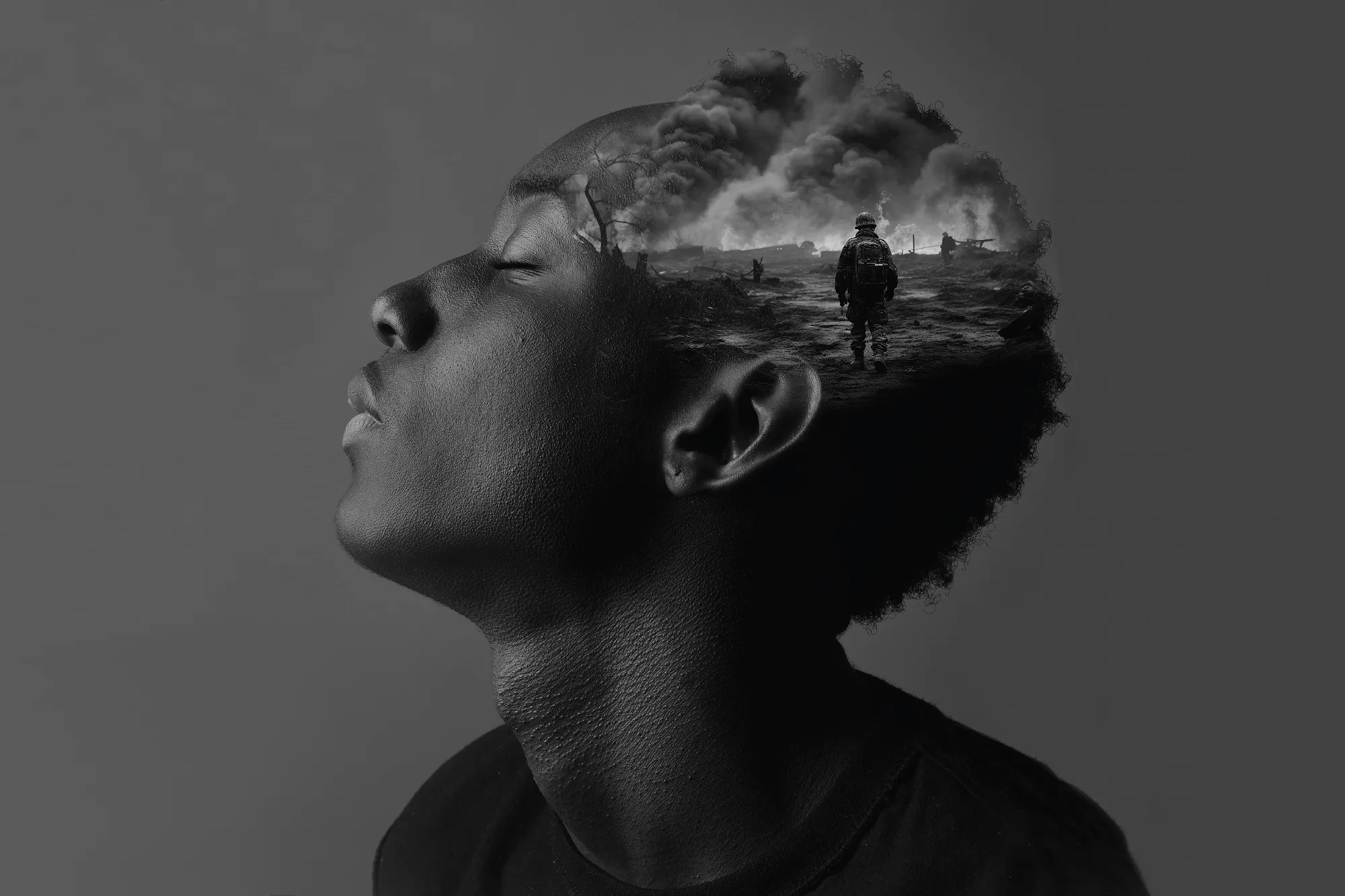
The mortar tube violently kicks like a mule against your shoulder, sending a wave of searing pain through your body that you are forced to ignore. Dust and cordite burn your throat as you drop another round down the tube with a loud thunk just before the 81mm shell arcs out over the Afghan valley. Taliban tracers stitch the ridgeline twenty meters to your left. Your Ranger platoon is pinned down in a dry wadi, radio crackling with the voice of your squad leader calling in danger-close air support. You’ve got three confirmed enemy kills on your sector, but one of them was a kid, no older than fifteen, who was caught in the crossfire while running ammo to his father. You saw the AK in his hands, but the image of his small frame collapsing like dead weight still lodges in your chest like shrapnel that no surgeon can cut out. Orders are orders. Mission first. You rack another round and keep firing.
Whether this was the war you signed up for or not, no one told you about the real fight that would start the day you came home.
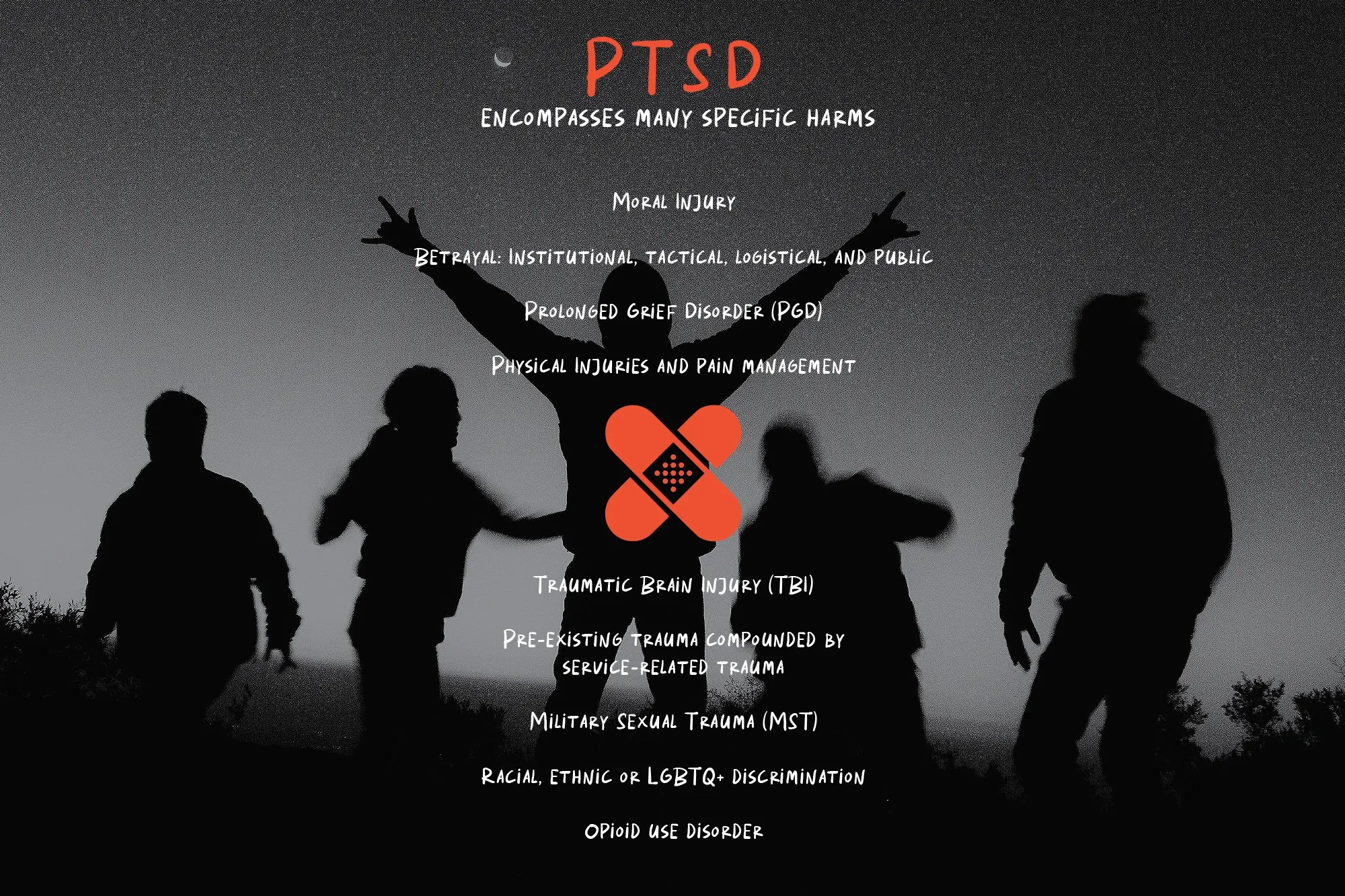
The C-17 touches down at Fort Bragg under a Carolina sky that almost feels too wide, too quiet compared to the narrow passages of enemy fire you’ve grown accustomed to. You hug your spouse and kids at the airfield, smile for the photos, and tell everyone you’re “good.” But inside, the intensity of hypervigilance never switches off. A car backfires and you’re scanning for cover. Grocery store crowds feel like ambushes. Sleep brings the same dreams: the kid, the muzzle flash, a radio call for medevac that came too late. You drink to quiet the noise. You snap at your family for no reason. The VA hands you pills and talks about therapy options, but the guilt, the shame, the sense that you betrayed something sacred inside yourself, it all festers. When the soul-deep wound of combat collides with the person you thought you were, it begins a haunting new pattern of existence. Add in the many layers of betrayal: leadership that sent you into half-planned ops with bad intel, a squad that fractured under pressure, an institution that promised lifelong care but delivered six-month waitlists and a deadly game of medication roulette, a public that thanked you for your service while also viewing you as flawed or broken. The invisible wounds become a second, almost deadlier battlefield that you tread daily.
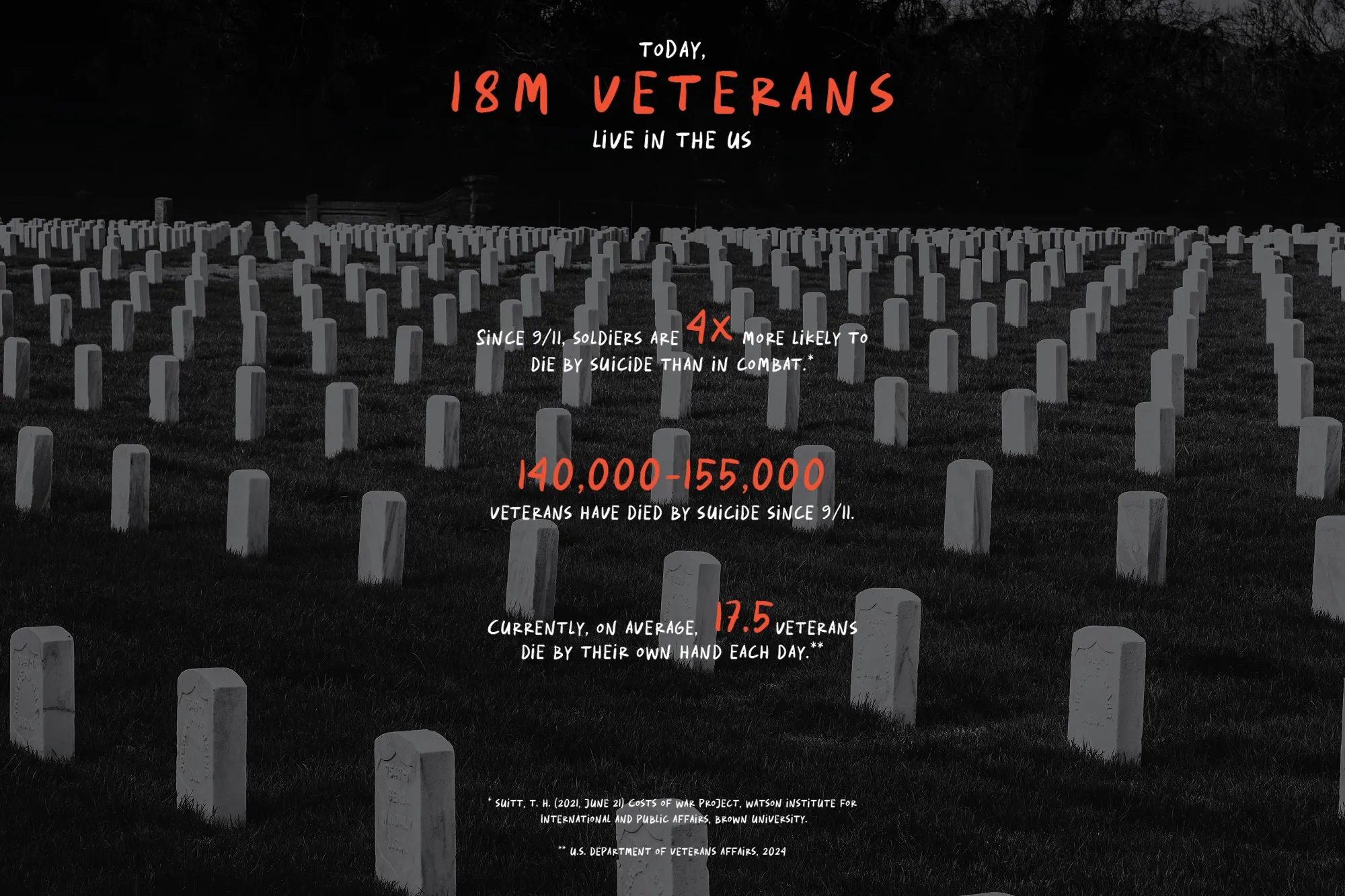
Sadly, the truths related to the battles that these veterans are left to fight at home are just as painful and ugly as the realities faced in the blood-soaked fields of combat. Since the Global War on Terror began in 2001, more than 140,000-155,000 veterans have died by suicide—far outpacing the roughly 7,000 U.S. troops killed in combat during those same conflicts. In 2023 alone, 6,398 veterans took their own lives, an average of 17.5 every single day. Veterans make up roughly 6 percent of the adult U.S. population, yet account for about 13–14 percent of all adult suicides. Suicide rates among veterans have climbed dramatically since 2001, with firearm-related veteran suicides rising more than 65 percent over that period. These aren’t just statistics; they are the quiet final chapter for brothers and sisters who survived the bullets in a fight for our freedoms, only to lose the war at home.
We understand the deeper wounds that go beyond the standard PTSD checklists these days. Moral injury—the crushing awareness that you violated your own deepest values—leaves veterans carrying shame and guilt that no amount of cognitive behavioral therapy can fully touch. Many grapple with the neurology of killing itself: human beings are hardwired against taking life, but the military’s conditioning overrides that wiring only to leave the brain in permanent overdrive. Hypervigilance becomes the new normal. Then come the many layers of betrayal mentioned earlier. Institutional betrayal when the VA system you trusted fails you. Leadership and logistical betrayal when orders felt reckless or equipment was lacking. Tactical betrayal in the split-second decisions that still replay at 3 a.m. Squad betrayal when the brotherhood that kept you alive dissolves into silence once everyone is stateside. Public betrayal when the nation moves on and your pain becomes an inconvenience. Without ancient warrior reintegration rituals—rites that once helped fighters transition back into the tribe—veterans often stay locked in survival mode, isolated, ashamed, and hopeless.
DEEP IN THE AMAZON: SOMETHING SHIFTED
Jesse Gould lived this story. A three-time deployer to Afghanistan with the 75th Ranger Regiment, he served as a mortarman in some of the most kinetic fights of the war. He came home with severe undiagnosed PTSD and traumatic brain injury from close proximity to blast after blast. Civilian life as an investment banker in New York only amplified the symptoms: anxiety that never slept, depression that hollowed him out, emotional numbness that wrecked his relationships. Desperate, he quit his job, sold everything he owned, and flew to Peru. There, in four indigenous ayahuasca ceremonies deep in the Amazon, something shifted. The plant medicine let him revisit the memories, not as a helpless victim of flashbacks, but with a new perspective that rewired the fear, dissolved the guilt, and physically calmed the inflamed pathways in his concussed brain. “It gave me different insights on my life and really seemed to reduce the anxiety, reduce the depression, reduce the hypervigilance,” Gould later said. “And it also did seem, from a physiological standpoint, to help reset my brain from the traumatic brain injuries.”
In a heartfelt refusal to let other veterans fight the same lonely war, he founded the Heroic Hearts Project (HHP) in April 2017, a veteran-led non-profit whose mission is simple yet radical: connect warriors and their spouses with safe, supported psychedelic-assisted therapies like ayahuasca, psilocybin, ketamine, MDMA, and ibogaine, in properly vetted retreat settings, while helping to provide the preparation, integration, and community they were denied after combat. HHP has now helped more than 1,500 veterans and military spouses access these programs, raised over $20 million, and built research partnerships with institutions including the University of Colorado Boulder and the University of Georgia. The organization doesn’t promise miracles; it offers a disciplined protocol of rigorous medical and psychological screening, pre-retreat coaching, peer support from fellow veterans, and long-term integration tools, so that these profound experiences have the best chance to translate into lasting change: better sleep, rebuilt marriages, sobriety, and a renewal of purpose in life after military service.
At the heart of that protocol is Gould’s own book, The Veteran’s Field Manual for Psychedelics: Healing PTSD and Trauma Through Psychedelic and MDMA Therapy, co-authored with Elaine Marshall. Written in the no-nonsense language of the battlefield, it explains why conventional treatments so often fail veterans and why psychedelics succeed where other post-war treatments don’t. It demystifies every substance—ayahuasca’s visionary depth, psilocybin’s neuroplasticity reset, MDMA’s capacity to reopen the heart, ibogaine’s addiction-interrupting power—while laying out preparation tactics, integration strategies, and how to vet legitimate providers. A companion workbook, The Veteran’s Guide to Psychedelics—nearly 300 pages of exercises, journaling prompts, veteran profiles, and practical tools developed in partnership with HHP—turns insight into daily discipline. Together they treat healing like a mission: plan it, execute it, debrief it, and keep moving forward.
HEALING WARRIORS
The proof is in the warriors who have walked the path. Kegan Gill, a naval aviator who survived the fastest ejection in aviation history—695 mph from an F/A-18E Super Hornet—woke from a two-week coma paralyzed, with severe TBI (Traumatic Brain Injury), a broken neck, and a body that doctors said would never fly again. He fought back, returned to duty, then crashed into delayed-onset PTSD, opioid addiction, VA-induced psychosis, and a psych hold that left him feeling betrayed by the very system meant to heal him. Alcohol, rage, and a marriage on the brink followed. Through HHP, he sat in an ayahuasca ceremony in Peru with other veterans and Shipibo shamans. “My profound experience with ayahuasca through the Heroic Hearts Project reignited my sense of purpose and offered me a new perspective on life,” he says. Integration coaching helped him rebuild: meditation, whole-food nutrition, hyperbaric oxygen for his brain, and, most importantly, reconnection with his wife and children. Today, Kegan is the author of the memoir Phoenix Revival, and serves as a speaker, meditation coach, and psychedelic facilitator. He credits HHP with saving his life.
Paula Cajiao, an Army nurse who deployed to Iraq in 2008–2009, spent her tour in the ICU and ER treating amputations, burns, and dying children. She carried the trauma of her experiences home in silence, numbing it with alcohol while wrestling with her own history of sexual and physical abuse. Conventional therapy helped a little. However, the daily demons of her time in service remained. She joined HHP for ayahuasca ceremonies with other veterans. “Thank you mother Aya for allowing me to access the darkest places in my soul and help me understand that we need the darkness in order to see the light,” she says. The shared container of warriors was transformative. Now sober and purposeful, Paula channels the healing into art. Her award-winning short film Shell Shocked and the feature Let There Be Light follow the story of a female veteran using plant medicine. She reiterates, “The Medicine works and veterans are not alone.”
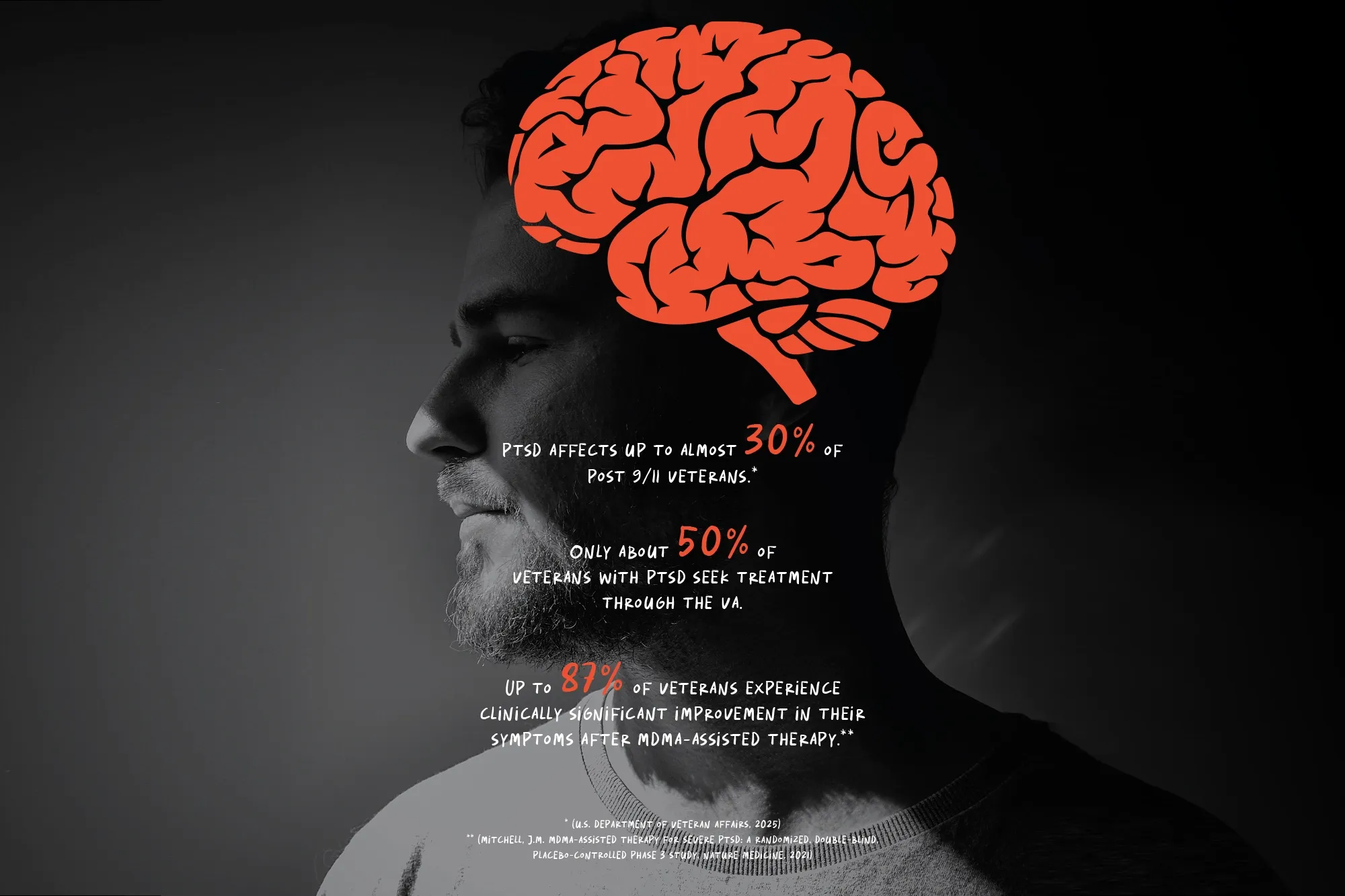
These stories are not exceptions. HHP participants consistently report sharp reductions in hypervigilance, rebuilt relationships, sobriety, renewed purpose, and even measurable healing from TBI. Peer-reviewed studies supported by the organization confirm improvements in mental health, reintegration, quality of life, and chronic pain.
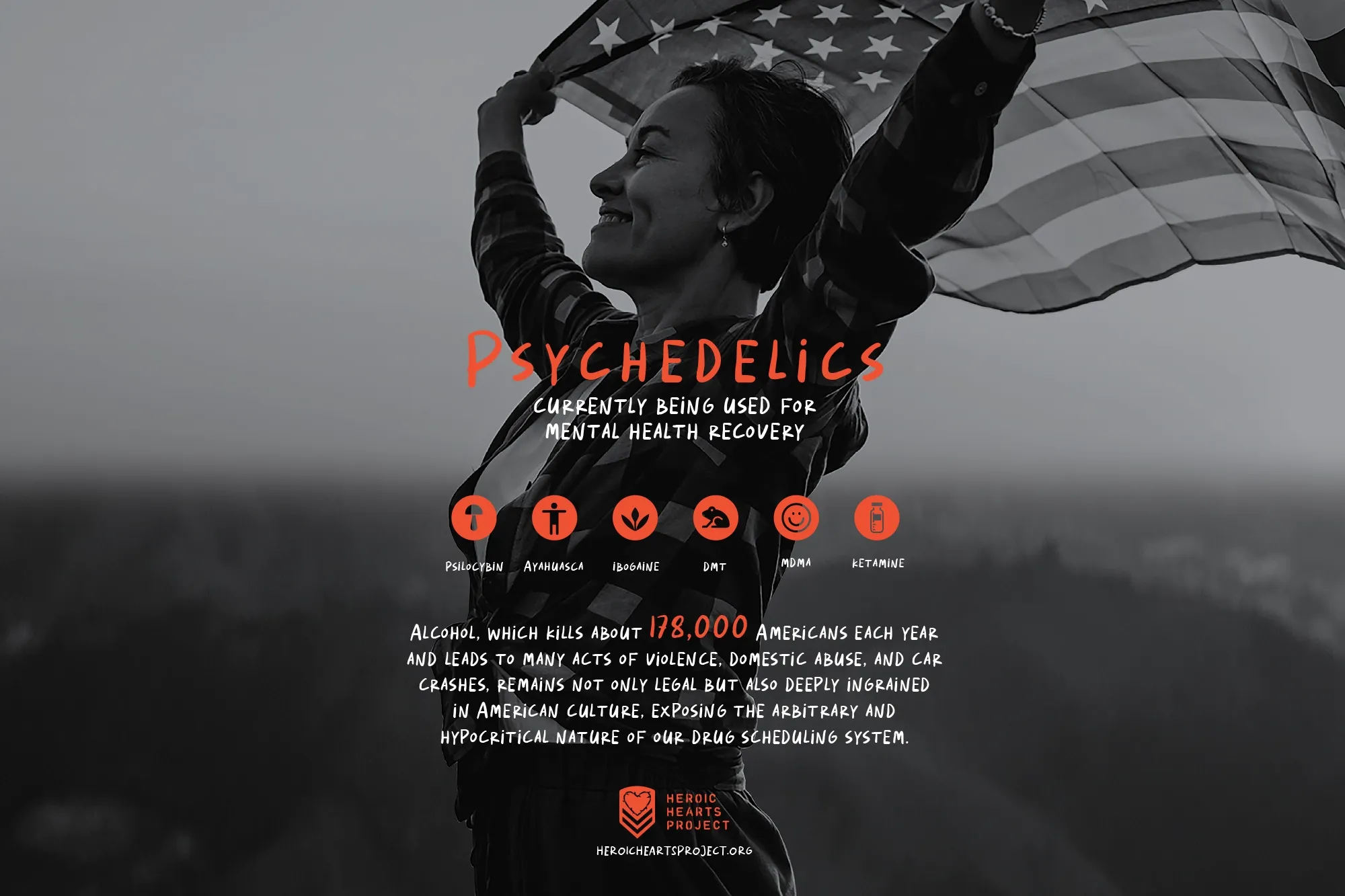
Yet the path forward is still fraught. Most treatments, especially ayahuasca and ibogaine, occur abroad because these substances remain Schedule I in the United States. Vetting safe, ethical providers is labor-intensive. Integration requires ongoing community support that the VA does not yet fund. Stigma inside the military and VA culture slows adoption. Funding scholarships for every veteran who needs them is an endless battle. But the horizon is brightening. On Saturday, April 18, 2026, the president signed an executive order supporting psychedelic research under the Right to Try Act. Meant to accelerate study, improve regulatory coordination, and advance promising therapies through the FDA pipeline, the order marks a bold new step in the right direction.
HHP’s research partnerships are building the evidence base. In 2025, the organization unified with Healing Breakthrough, its federal advocacy arm, to strengthen policy-focused efforts in Washington and make the veteran voice and experience central to federal decision-making. As data accumulates and public understanding grows, the same warrior ethos that carried these men and women through combat is now carrying them, and the nation, toward a future where healing is no longer an underground mission but a new standard of care.
The dust may have settled on the battlefields of Afghanistan and Iraq, but the war for the veteran soul continues in living rooms, VA waiting areas, and the quiet hours before dawn. The Heroic Hearts Project refuses to let that war be fought alone. By reclaiming ancient plant medicines, pairing them with modern science, and wrapping them in veteran-to-veteran brotherhood, HHP is proving that the same courage that answered the call to serve can answer the call to heal. For every warrior still carrying the weight of moral injury, betrayal, and unspoken grief, the message is clear: the real battle can end. Healing is possible. And no one has to fight it in silence anymore. The concept of “leave no man behind” is etched on the soul of every living military veteran. HHP believes that responsibility does not end when a veteran returns home.
Scott “SVH” Von Heldt is a lifelong professional musician, author, spiritual guide, and cannabis entrepreneur. His book, Higher Vibes: Tuning In To Your Elevated Self Through Cannabis, is available now.
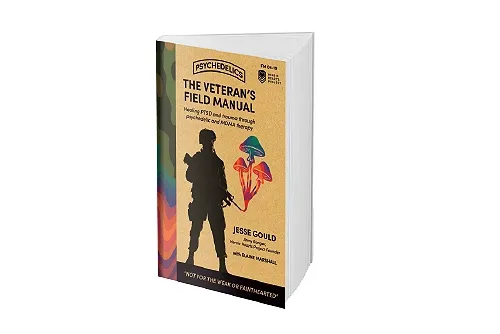
The Veteran’s Field Manual for Psychedelics: Healing PTSD and Trauma Through Psychedelic and MDMA Therapy is written by Jesse Gould, a former Army Ranger and the founder of Heroic Hearts Project, with Elaine Marshall. Most everyone has some vague notion that they understand PTSD. But PTSD and trauma are both complicated and multi-faceted. This fascinating personal account does an excellent job at expanding our understanding of war's effect on people and the potential for psychedelics to have a healing impact.