

Survival of the Species
Who will Survive the Apocalypse?
Written By: HUY CHAU
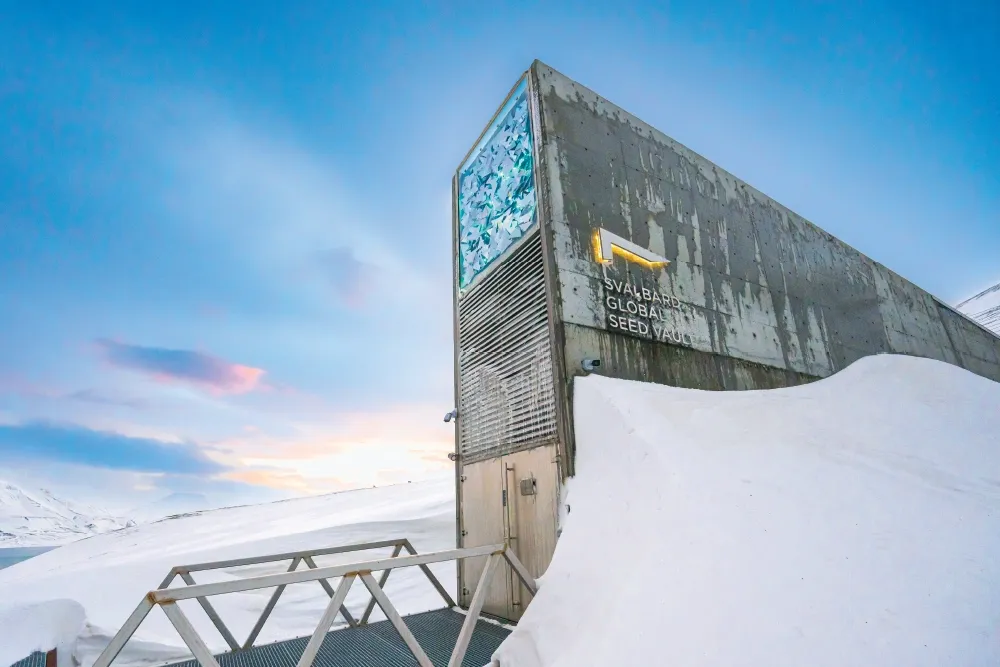
At the top of the world, where the sun disappears for months and polar bears roam the surrounding wilderness, a glowing concrete doorway is carved into a frozen mountain. It looks less like a government facility and more like the entrance to a futuristic art museum—part sci-fi bunker, part portal into an Arctic landscape where snow-covered peaks seem to conceal another world.
Behind it lies something more valuable than gold, oil, or data.
It holds seeds.
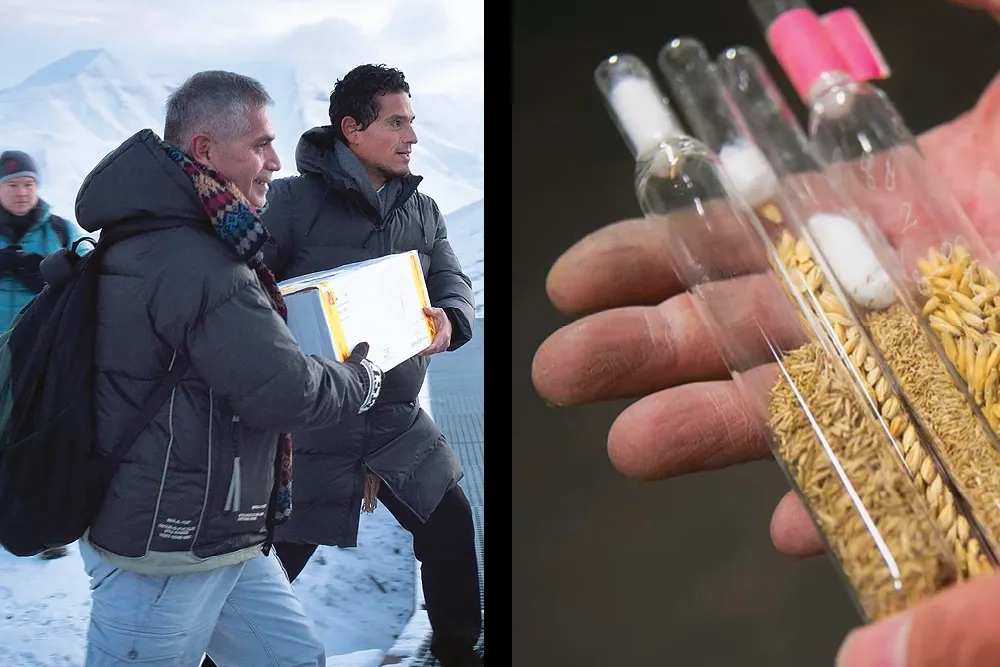
Not just any seeds, but the genetic blueprints of the plants that feed the planet: wheat, rice, corn, beans, barley, peppers, melons, herbs, flowers, forgotten grains, and wild grasses. More than a million crop varieties are sealed into foil packets, stacked on steel shelves, and frozen in time.
And here, buried deep inside the polar bedrock, sits the Svalbard Global
Seed Vault, humanity’s backup hard drive for food. If the genetic diversity behind our crops is ever lost, this is where it can be restored.
THE WORLD’S BACKUP PLAN
The Svalbard Global Seed Vault was built to address the growing risks facing global agriculture. Most of the world’s food now comes from a narrow range of crop varieties. While this makes food production more efficient, it also increases risk. Crop diseases, climate extremes, and political instability can quickly disrupt harvests or destroy entire seed collections. When a variety is lost, it cannot be recreated.
To reduce that risk, the Seed Vault stores duplicate copies of crop seeds from gene banks around the world in a secure, cold, and stable environment. These backups allow collections to be restored if the originals are damaged, lost, or no longer accessible.
Opened in 2008, the facility was engineered for long-term storage, combining modern refrigeration with the natural cooling and stability of Arctic permafrost. This design allows seeds to remain viable for decades and, in many cases, centuries, preserving agricultural diversity far into the future.
WHY THE ARCTIC
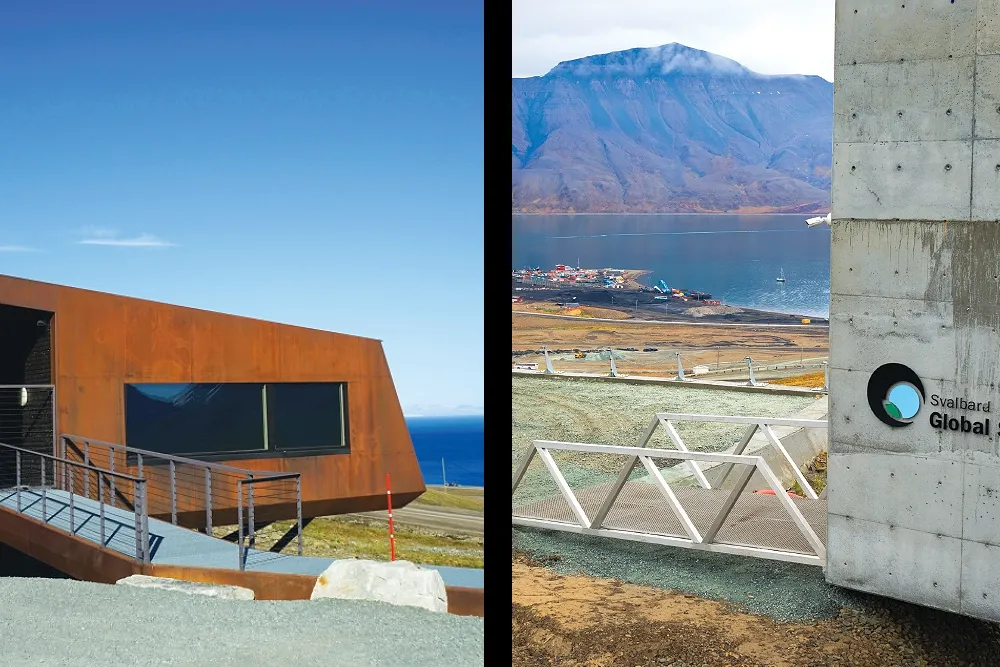
Svalbard sits halfway between mainland Norway and the North Pole, surrounded by Arctic ocean and open sky. The landscape is remote, cold, and dry, with permanently frozen ground that creates ideal conditions for long-term seed preservation. Located on the island of Spitsbergen, it is the farthest north a person can travel on a scheduled commercial flight.
Cold temperatures slow biological aging, and low humidity prevents mold and decay. The vault is built deep inside Platåberget, or Plateau Mountain, at a depth of 120 to 150 meters, where solid rock and permafrost provide natural stability and insulation. Even if mechanical systems were to fail, the surrounding mountain would continue to keep the seeds frozen. Inside, the vault is maintained at a constant temperature of −18°C (−0.4°F).
Protected from flooding, earthquakes, and rising sea levels, the site is one of the most naturally secure locations on Earth for a seed bank. Here, nature itself functions as part of the storage system, quietly safeguarding the future of agriculture.
Behind it lies something more valuable than gold, oil, or data. It holds seeds.
WHO BUILT THE VAULT?
The Seed Vault was established through international cooperation among governments and agricultural research institutions. Norway financed and constructed the facility and made it available as a global public resource. Day-to-day management is handled by the Nordic Genetic Resource Center, or Nord- Gen, while the Crop Trust supports long-term operations and helps gene banks around the world prepare and send their seed deposits.
Ownership of the seeds remains with the institutions that deposit them. Norway does not control the collections. Each country or organization retains full rights to its own material, and only depositors can authorize access to their seeds. This ensures the vault functions as a secure backup rather than a centralized collection.
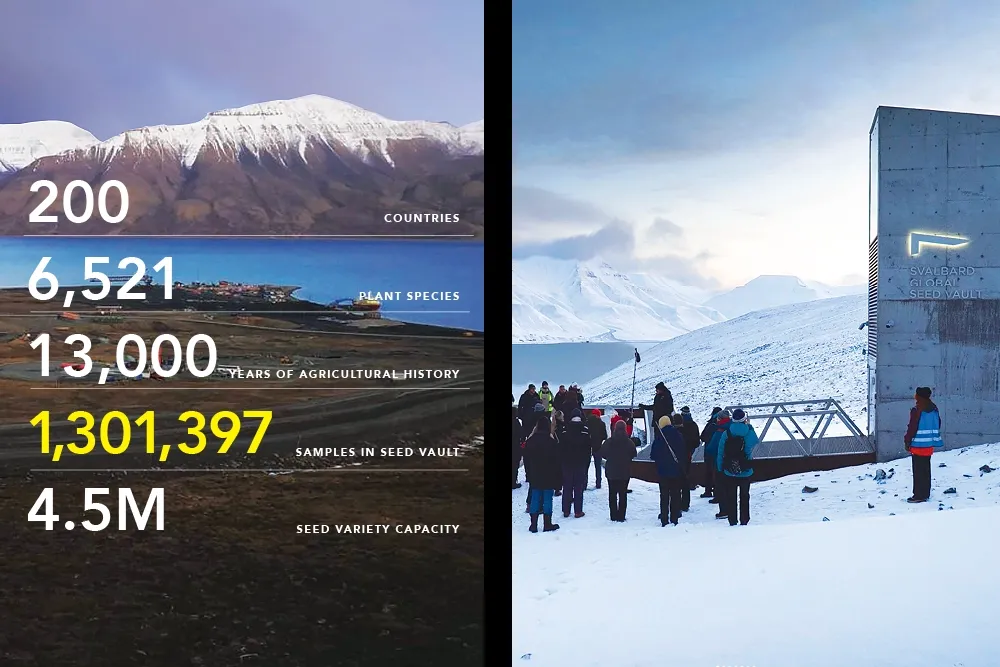
It functions as a shared international repository for crop diversity. Seed deposits have come from more than 200 countries and territories, including major contributors such as India, the United States, Germany, Canada, Australia, South Korea, and the Netherlands, as well as first-time deposits from countries including Bangladesh, Bolivia, Chad, Nigeria, Papua New Guinea, and Suriname. Indigenous communities, including the Cherokee Nation and Andean farming groups, have also contributed heirloom crop varieties, making the collection a broad record of global agricultural diversity.
Despite the nickname “doomsday vault,” it cannot be raided for survival. It is a backup system for gene banks, not a public seed store.
INSIDE THE MOUNTAIN
As of early 2026, the Svalbard Global Seed Vault holds more than 1.35 million seed accessions from around the world, meaning individual, cataloged samples of specific crop varieties collected from particular places and farms. Together, these represent thousands of crops that span over 13,000 years of agricultural history.
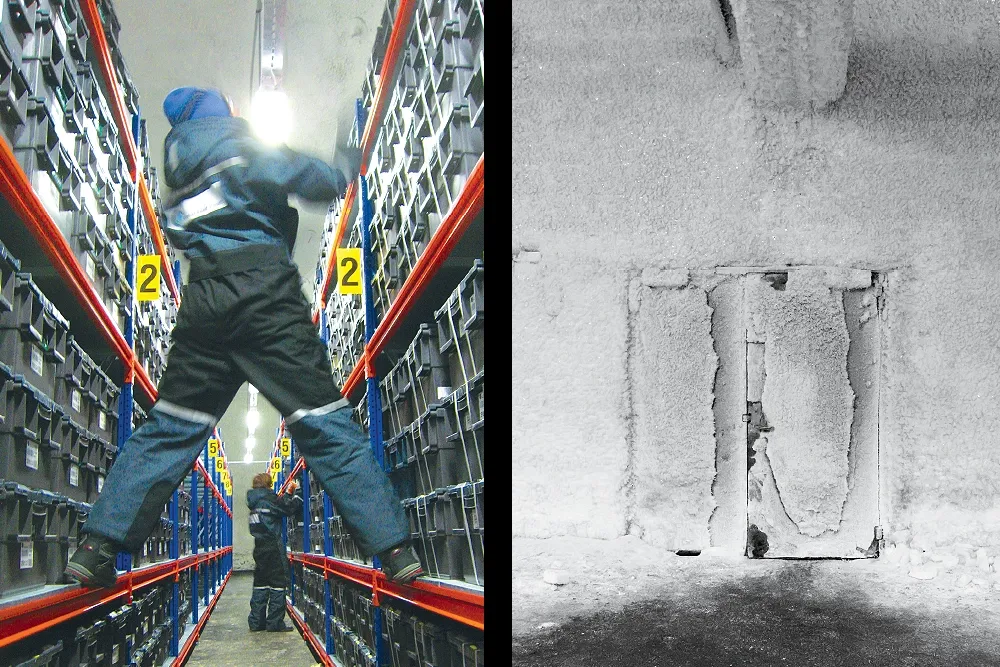
Alongside familiar staples are rare landraces and wild relatives of modern crops, preserved for their genetic traits that may be critical for adapting agriculture to heat, drought, disease, and changing climates. Each seed sample is sealed in foil, boxed, and stored on steel shelves inside three underground, climate-controlled chambers, where the seeds remain dormant but viable for long-term preservation.
WHAT CAN’T BE SAVED
The Seed Vault is powerful, but it is not a botanical time capsule for everything. It only stores what scientists call orthodox seeds, meaning seeds that can be dried and frozen without being damaged. That excludes bananas, coconuts, avocados, cacao, coffee, vanilla, pineapples, and many tropical fruits, which must be preserved in living collections and tissue-culture labs.
Root crops like potatoes, sweet potatoes, yams, cassava, and taro are also missing. They are grown from pieces of plants rather than seeds, so they must be kept alive in field gene banks that are more vulnerable to disease and political instability.
Wildflowers, forest trees, roses, houseplants, and decorative garden varieties are not priorities either. Svalbard is not a biodiversity museum. It is an agricultural hedge against disaster.
One of the most persistent myths about the Seed Vault is that cannabis is not there, but it is. The vault stores thousands of cannabis sativa seeds, mostly hemp and research varieties deposited by national gene banks and scientific institutions. These are not modern dispensary strains, but heritage and breeding lines valued for fiber, oil, resilience, and research. Their inclusion reflects Svalbard’s guiding principle: to conserve plant diversity with long-term agricultural and scientific value, alongside the world’s major food crops.
THE GMO QUESTION
A common question about the Seed Vault is whether it stores genetically modified crops. In general, it does not, reflecting the vault’s focus on preserving natural crop genetic diversity rather than commercial products.
Svalbard exists to back up the world’s public gene banks, which focus on preserving natural crop diversity: traditional varieties, locally adapted landraces, and wild relatives of modern crops. These are the raw genetic materials breeders rely on to develop plants that can survive drought, disease, and changing climates. Commercial GMO seeds are usually patented products owned by private companies and are not part of public gene bank collections.
The vault is not meant to preserve finished products. GMO crops are typically built by adding one or a few engineered traits to an existing plant. What matters for long-term food security is the underlying genetic diversity of crops, the thousands of natural traits that allow plants to adapt over time. That diversity comes from non- GMO seed lines, which is why they are what the vault prioritizes.
Many GMO crops are also hybrids that do not reproduce true from seed, making them less suitable for long-term conservation in a frozen archive.
In theory, research institutions could deposit GMO lines, but in practice Svalbard overwhelmingly holds non-GMO, publicly owned seeds intended to preserve the genetic foundation of global agriculture.
By safeguarding that foundation, the vault ensures that future breeding, whether traditional or high-tech, will always have something to build from.
One of the most persistent myths about the Seed Vault is that cannabis is not there, but it is.
BEYOND SVALBARD
While Svalbard is the most high-profile seed repository, it operates as part of a global system of gene banks that conserve crop diversity. In the United States, the National Center for Genetic Resources Preservation in Fort Collins, Colorado maintains long-term frozen collections of seeds, livestock genetics, and microbial strains. In Africa, the Southern African Development Community gene bank in Zambia stores regional crop varieties vital to food security across southern Africa. In India, the National Bureau of Plant Genetic Resources coordinates a nationwide network preserving thousands of indigenous crop varieties adapted to diverse climates.
Together, these institutions form an international conservation network that safeguards agricultural genetic resources for research, breeding, and food production worldwide.
WHEN THE VAULT WAS TESTED
For years, the Seed Vault existed as a precaution, a safeguard waiting to be tested. That changed in 2015, when civil war in Syria cut off access to one of the world’s most important agricultural seed banks, which held rare collections of chickpeas, lentils, barley, and ancient grains. Fortunately, duplicate samples of those seeds had already been deposited in Svalbard.
For the first time, the Arctic vault was used for its intended purpose.
Thousands of seed packets were retrieved and transferred to farms and research stations in Lebanon and Morocco, where they were grown and multiplied to rebuild the damaged collection.
Today, seeds once locked in ice are back in the ground, confirming that the vault plays a real role in safeguarding the future of farming. The Svalbard Global Seed Vault is not a response to a single disaster. It is a long-term strategy for managing risk in a world where climate change, conflict, and crop disease increasingly threaten food systems. The vault does not predict what will go wrong. It simply ensures that when something does, the biological foundation of agriculture can be rebuilt.
SEEING THE VAULT
The Svalbard Global Seed Vault is not open to the public. For security and bio-safety reasons, only authorized staff and representatives of depositing institutions are allowed inside. But visitors who make it to Svalbard can still experience the vault from the outside.
Set into the mountainside is its striking illuminated artwork, Perpetual Repercussion by Norwegian artist Dyveke Sanne. Made of mirrored steel and glowing fiber-optic threads, it catches Arctic light in summer and softly radiates blues and greens through the long polar night, transforming a slab of frozen rock into a beacon of quiet wonder.
For those who cannot reach the Arctic, an official virtual tour allows visitors to explore the vault’s corridors, storage rooms, and shelves online, offering a rare look inside one of the most secure agricultural facilities on Earth.
SeedVaultVirtualTour.com
The “Doomsday” Vault
Timeline
>2008 The Seed Vault officially opened through a partnership between Norway, NordGen, and the Crop Trust, earning recognition as one of Time magazine’s top inventions.
>2013 Roughly one-third of the world’s crop diversity held in gene banks was represented in the Svalbard Global Seed Vault.
>2015 During the Syrian civil war, ICARDA made the first-ever withdrawal from the vault to regenerate lost seed collections in Lebanon and Morocco.
>2018 On its 10th anniversary, the vault received more than 70,000 new seed samples from 23 contributors, bringing total holdings beyond one million samples.
>2020 The Cherokee Nation became the first Indigenous group from North America to deposit seeds. That year, holdings surpassed one million samples during a global seed summit.
>2023 The Seed Vault marked its 15th anniversary with nearly 20,000 new seed deposits from 20 gene banks, including first-time contributions from Albania, Croatia, North Macedonia, and Benin.
The Humble Banana is a perfect example of why the Svalbard Global Seed Vault exists. Today’s Cavendish banana, the commercial variety found in supermarkets around the world, is almost genetically identical everywhere, a fragile monoculture vulnerable to disease and climate change. Scientists warn that rising temperatures and new plant pathogens could threaten banana production within decades.
Yet bananas cannot be stored in Svalbard at all. Most edible bananas are seedless clones grown from cuttings, and even wild banana seeds cannot survive freezing. Instead, their genetic diversity must be preserved in field gene banks and tissue-culture laboratories, making bananas a powerful reminder that Svalbard is vital, but not enough on its own.